Summary
Emulsions are important in contemporary fine dining because they create smooth, cohesive sauces that bring together ingredients with different properties while adding richness, acidity, aroma, and visual appeal. By carefully combining elements such as oil, butter, citrus, stock, or other liquids, chefs can create sauces and dressings with a refined texture that complements rather than overwhelms the main ingredients. Emulsions are particularly useful for contemporary cuisine because they allow chefs to control the mouthfeel, intensity, and presentation of a dish with remarkable precision.
Contemporary fine dining often depends on the small details that bring an entire dish together. Emulsions are one of those techniques, quietly contributing to the texture, flavor, and polished presentation that guests experience with every bite.
What Is an Emulsion in Cooking?
An emulsion is a mixture of two liquids that do not normally combine easily, such as oil and water-based ingredients, brought together into a stable or temporarily stable sauce. Classic culinary examples include vinaigrettes, mayonnaise, hollandaise, and butter-based sauces.
The technique works by dispersing tiny droplets of one liquid throughout another, creating a unified mixture with a smoother consistency. In traditional hollandaise, for example, butter and lemon juice are brought together with egg yolk acting as an emulsifying agent.[1] Contemporary chefs can build on these principles to create sauces with different textures and intensities.
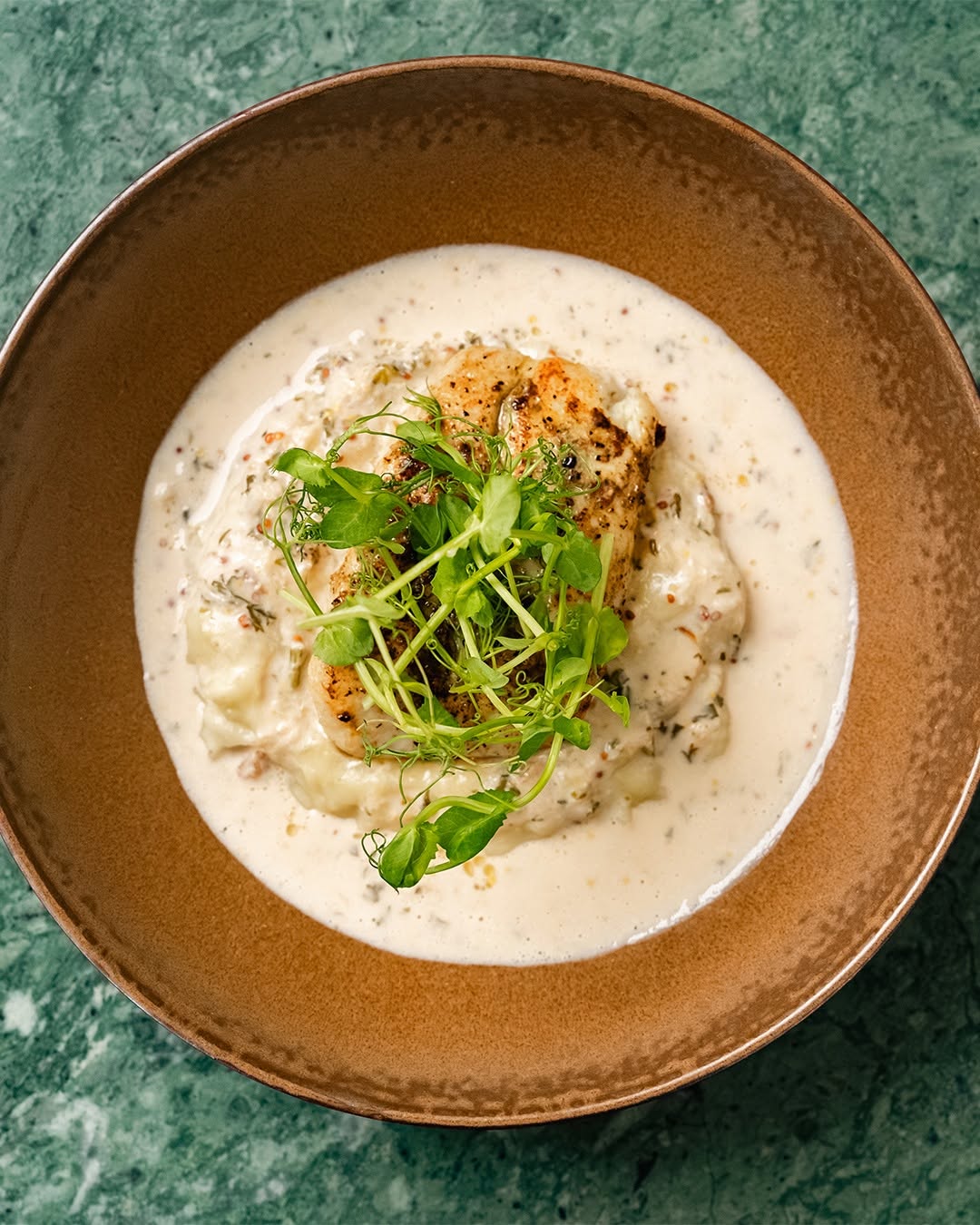
Emulsions can also give a dish a more polished appearance. A properly prepared sauce may have a glossy finish and even consistency, allowing it to be carefully spooned, brushed, dotted, or poured across the plate.
How Emulsions Improve Flavor and Texture
Emulsions help chefs distribute flavor evenly while giving dishes a smooth and cohesive mouthfeel. This makes them especially useful when a dish contains contrasting ingredients that need a connecting element.
A sauce can act as the bridge between a rich protein and a bright garnish, for example. An herb and citrus emulsion can provide freshness to a rich seafood dish, while a butter-based emulsion can add depth and silkiness to vegetables, grains, or delicate proteins.
Some of the qualities chefs can achieve through emulsions include:
- A silky, smooth mouthfeel
- Even distribution of fats and water-based flavors
- A glossy and refined appearance
- Controlled richness without a heavy sauce
- A cohesive connection between different ingredients
The result is more than a decorative sauce. A well-designed emulsion can make individual components taste as though they belong together, creating a more balanced bite.
Why Emulsions Suit Contemporary Cuisine
Emulsions give chefs considerable control over how a sauce behaves on the plate. This flexibility fits naturally with contemporary fine dining, where presentation, texture, and precise flavor relationships are often considered alongside the ingredients themselves.
Modern culinary techniques may also use hydrocolloids and other stabilizing ingredients to influence viscosity and help maintain the structure of sauces. Food science references note that ingredients such as xanthan gum can function as stabilizers for emulsions and can help control sauce consistency.[2]
However, contemporary cooking does not require an elaborate approach to emulsification. A simple citrus vinaigrette or carefully mounted butter sauce can be just as effective as a technically complex preparation when it complements the dish properly.
Common Emulsions and Their Culinary Roles
| Emulsion | Typical Culinary Role |
| Vinaigrette | Adds acidity and brightness |
| Hollandaise | Adds richness and silky texture |
| Butter Emulsion | Creates a glossy, rich sauce |
| Herb Emulsion | Adds freshness and aromatic flavor |
Emulsions Create Balance Without Overpowering
The best fine dining sauces enhance the central ingredient rather than competing with it. An emulsion can deliver concentrated flavor in a controlled way, allowing a chef to add richness or acidity while preserving the character of the food underneath.
This is particularly valuable with seafood, where delicate flavors can easily be overwhelmed by heavy sauces. A light citrus, herb, or vegetable-based emulsion can provide enough richness and moisture to complement the seafood while maintaining a sense of freshness.
Emulsions can also connect different elements on a plate. A carefully balanced sauce may tie together a protein, vegetable, grain, garnish, and seasoning, giving the entire dish a unified identity.
Precision Makes the Difference
Successful emulsions depend on careful preparation because temperature, proportions, agitation, and timing can all influence the final result. The goal is to achieve the desired consistency without allowing the mixture to separate or become excessively thick.
Chefs can adjust an emulsion according to the needs of the dish. A delicate sauce may be light and fluid, while another preparation might need more body to cling to a protein or vegetable.
That precision is part of what makes emulsions so valuable in fine dining. They may appear simple when served, but their ability to provide flavor, texture, and visual cohesion reflects the careful thought behind the entire dish.
If you'd like to learn more about how thoughtful culinary techniques contribute to a refined dining experience, contact us today. We look forward to welcoming you and showcasing how carefully balanced sauces and other details can elevate every dish.
FAQ
- What is an emulsion in cooking?
An emulsion is a mixture created by combining liquids that do not naturally blend, such as oil and water-based ingredients, into a unified sauce. - What are common examples of culinary emulsions?
Vinaigrettes, mayonnaise, hollandaise, and certain butter-based sauces are familiar examples of culinary emulsions. - Why are emulsions useful with seafood?
Emulsions can add moisture, richness, acidity, or aromatic flavors while remaining light enough to complement delicate seafood. - What causes an emulsion to separate?
An emulsion can break when its ingredients are not properly combined or when factors such as temperature, proportions, or agitation disrupt its structure. - Do contemporary chefs use special ingredients to stabilize emulsions?
Some chefs use stabilizing ingredients such as hydrocolloids to influence viscosity and improve the stability of certain sauces.[2]
Citations
- Hollandaise Sauce, Science of Cooking, Accessed August 19, 2026, https://www.scienceofcooking.com/food-encyclopedia/hollandaise_sauce.htm
- Chemical and Physical Properties of Xanthan Gum in Cooking, Science of Cooking, Accessed August 19, 2026, https://www.scienceofcooking.com/chemical_physical_properties_xanthan_gum.htm